Make it easy for accounts payable
Large clients pay invoices through an accounts payable team that did not hire you. They match your invoice to a purchase order and look for a few things:
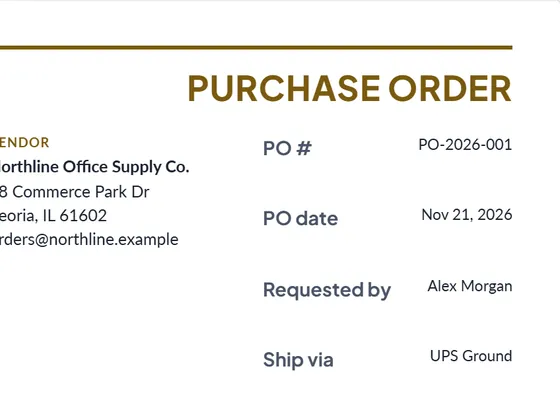
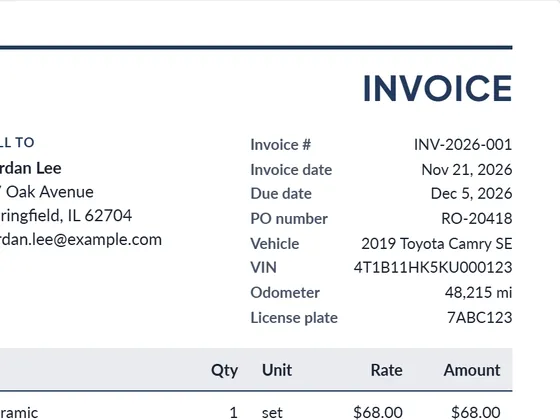
- Their PO number in the PO field. Without it, many companies cannot pay at all.
- The billing period and the project name.
- Hours per phase or per role, not one lump sum, so the approver can check it against the agreement.
- Expenses as their own lines, with receipts attached when the contract requires them.
- Payment terms such as net 30 and your bank details.
Retainers
For a monthly retainer, bill it as one line ("Advisory retainer, December") at the start of the month. Hours beyond the retainer go on the next invoice as separate lines.
Frequently asked questions
Should I bill hourly or per project?
Both are common. Hourly is simple when scope is unclear. Per project or per deliverable rewards efficiency and is easier for the client to budget. Many consultants combine them: fixed fee for defined deliverables, hourly for extra work.
Do I need to attach a timesheet?
Only if the contract asks for it. Detailed lines per phase are often enough; when in doubt, ask the client contact what their approver needs.
Can I download it as Word or Excel?
Yes. Every document downloads as PDF, Word (.docx) and Excel (.xlsx). The Excel file keeps working formulas for line totals, tax and the grand total, so you can keep editing it offline.
Is it really free?
Yes. Creating and downloading documents is free and needs no account. Free documents carry a small "Created with PlanPrint" line at the bottom. Documents Pro removes it and adds a saved client and item library.
Guides
- Estimate vs quote vs bid vs proposal
What separates an estimate, a quote, a bid and a proposal, when to send which, and what each document should contain. With a side-by-side comparison table.
- How to write an estimate customers say yes to
How to write a job estimate step by step: scope, line items, materials and labor, exclusions, validity date and payment terms, with a worked example.
- Net 30 and 2/10 net 30 payment terms, explained
What net 30, net 15 and 2/10 net 30 mean, how to calculate the due date and the early-payment discount, and why skipping a 2% discount costs about 37% a year.